

Walk into an empty exhibition hall and clap your hands.
Hear that? The clap bounces off the floor, the ceiling, the glass, and comes back to you a split second later. Now fill that hall with 3,000 people, a stage, a DJ booth in the next zone and a coffee machine that never stops.
Then ask an interpreter to catch every word of a keynote speech and turn it into Arabic, live.
Welcome to the hidden challenge of big multilingual events. The venue looks amazing in photos. But for sound, it can be a nightmare.
Why big venues are tricky for language
The GCC hosts some of the largest event spaces in the world: exhibition centres, arenas, ballrooms with glass walls and huge ceilings. They are built to impress the eye, not the ear.
Here is what usually goes wrong:
- Echo. Hard surfaces like marble, concrete and glass reflect sound. In a very large room, the speaker’s words overlap with their own echo. Consonants blur. “Fifteen” and “fifty” start to sound the same.
- Background noise. Air conditioning, catering, other stands, people talking at the back. Every extra sound competes with the speaker.
- Distance. The further a delegate sits from the speakers, the weaker and muddier the sound gets.
- Light. Yes, light. Infrared receivers work with invisible light. Strong sunlight through glass walls can interfere with the signal if the system is not planned for it.
For a delegate listening in their own language, any of these can mean missing the one sentence that mattered.
The golden rule: the interpreter can only interpret what they can hear
This is the part many organisers forget. Simultaneous interpreters do not listen to the room. They listen to a clean audio feed from the speaker’s microphone, through their headphones, inside a booth.
If that feed is poor, even the best interpreter in the world is working half-blind. So great interpreting starts long before the event, with great sound.
6 ways to master acoustics in a mega-venue
1. Visit the venue first
Every hall behaves differently. A technical site visit shows where the echo is worst, where the noise comes from, and where the sunlight hits. Fifteen minutes of walking around can save a full day of problems.
2. Put the booths in the right place
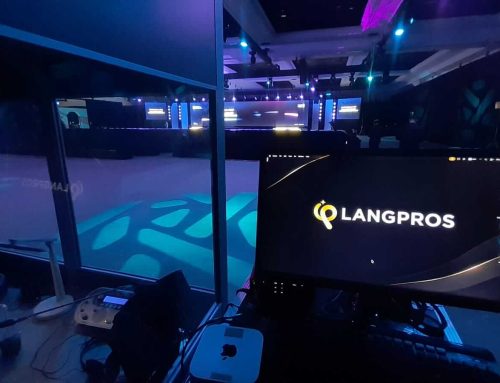
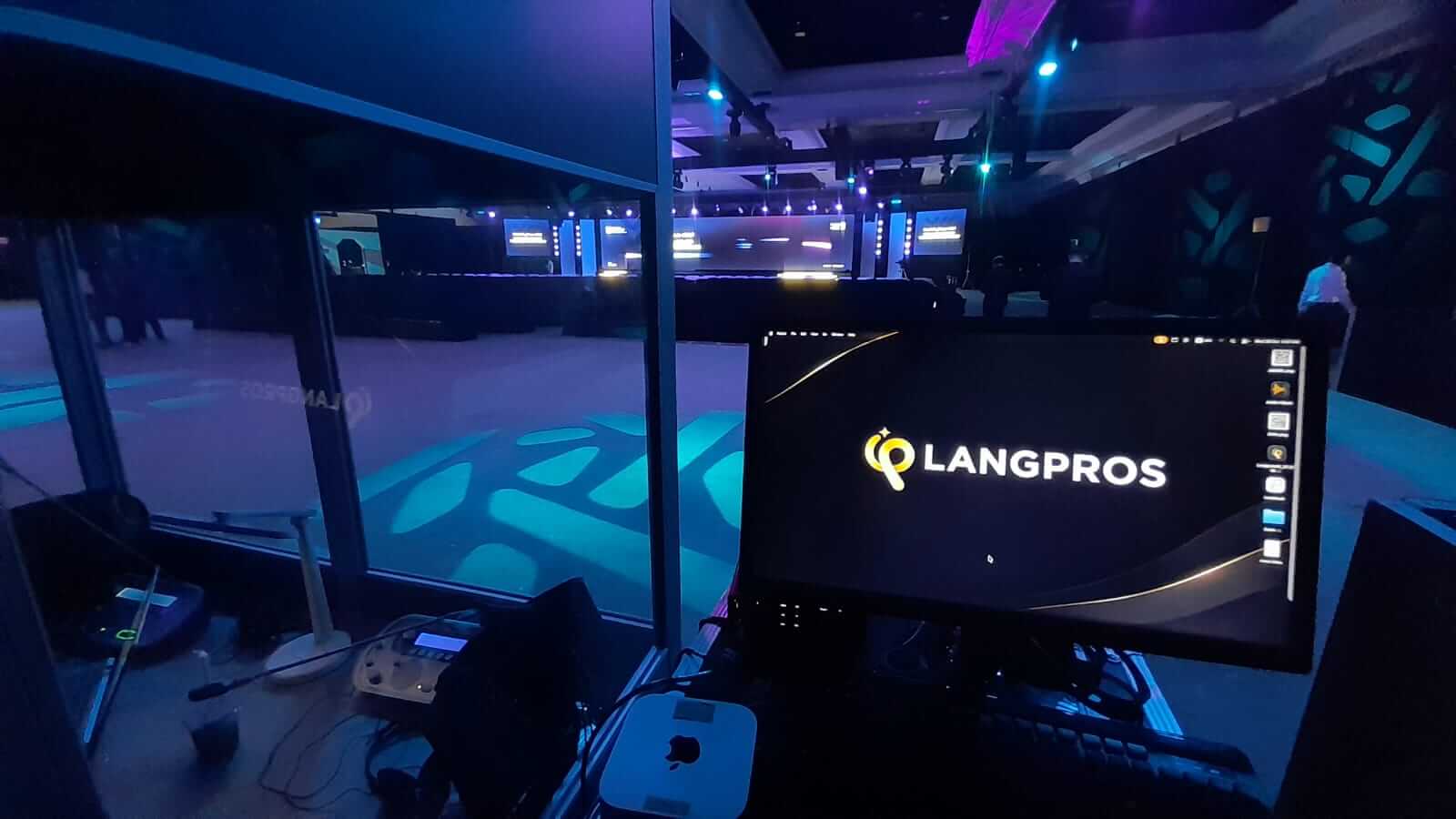
Interpreting booths need a clear view of the stage and the speaker’s face. Interpreters read lips, slides and body language. Booths also need to be away from doors, kitchens and loud zones, and properly sound-insulated, so the interpreters’ voices do not leak into the room.
3. Feed the interpreters directly from the mixing desk
The cleanest sound comes straight from the speaker’s microphone into the interpreting system. No room echo, no crowd noise. This is where your AV team and your interpreting team must work as one.
4. Use push-to-talk microphones for discussions
In panels and Q&A sessions, one microphone at a time keeps the audio clean. Push-to-talk microphones stop people talking over each other, which helps interpreters, listeners and the recording.
5. Plan the receiver coverage
Infrared systems are secure and reliable, and the signal stays inside the room. But the radiators that send the signal must be placed to cover every seat, including the corners and the back rows. Big rooms often need several of them.
6. Test, then test again
A full sound check with the interpreters, the receivers and a real speaker, before doors open. Walk the room with a receiver in your ear. If you can hear clearly from the worst seat, everyone can.
Where human interpreters, AI and equipment fit together
A mega-venue event usually has many kinds of sessions. Each one needs the right solution.
- Human interpreters for the moments that matter. Keynotes by ministers, signing ceremonies, board sessions and negotiations need professional interpreters. Langpros is certified to ISO 23155 for conference interpreting, and for high-stakes sessions, this is always our first recommendation.
- AI solutions for events for wider reach. For side sessions, workshops and seminars, attendees can follow live captions and translated text on their own smartphones. AI also depends on a clean audio feed, so the same sound rules apply.
- Equipment and AV that make it all work. Interpreting equipment has been our core business for over 10 years. We hold more than 2,000 infrared receivers, more than 15 interpreting booths and more than 300 push-to-talk microphones, plus PTZ cameras and conference AV integration. Equipment is also available from our Riyadh warehouse.
When one team handles the interpreters, the booths, the receivers and the sound, there is no finger-pointing on the day. There is just one clear voice in every language.
Quick checklist for your next big venue
| Question | Yes | No |
|---|---|---|
| Has a technical team visited the venue? | ☐ | ☐ |
| Do the booths have a clear view of the stage? | ☐ | ☐ |
| Do interpreters get a direct feed from the mixing desk? | ☐ | ☐ |
| Is receiver coverage planned for every seat? | ☐ | ☐ |
| Is a full sound check planned before doors open? | ☐ | ☐ |
One “No” is enough for delegates to miss the message.
Planning an event in a big venue?
Langpros plans multilingual events from the first site visit to the last session: interpreters, AI solutions, booths, receivers, microphones and AV, in the UAE and Saudi Arabia and worldwide.
Contact us and let’s make sure every word reaches every seat.
You May Also Like