

Have you ever watched a simultaneous interpreter at a massive international summit? They sit in a booth, listening to a live speech in one language, and effortlessly speak it in another in real time. It looks like absolute magic.
You might think, “Wow, they must just be really good bilinguals!” But here is a little secret: simply being bilingual does not automatically make someone a professional interpreter. In fact, high-level conference interpretation is an incredibly complex, exhausting cognitive skill that takes years of training to master.
When you are planning a high-stakes event, an international board meeting, or a global summit, how can you be absolutely certain your message won’t get lost in translation? That is where a massive industry game-changer comes in: ISO 23155.
Let’s pull back the curtain on the interpretation industry with 7 things you didn’t know, and see exactly why this strict international standard makes a night-and-day difference for modern events.
1. Professional Interpretation is Never “One Size Fits All”
True professional language providers don’t just assign any available native speaker to an event. Interpreters are hand-picked from global networks based entirely on their professional backgrounds and specific subject-matter expertise. A legal translation expert won’t be dropped into a medical convention, and a medical interpreter won’t be coding financial data on the fly.
The ISO 23155 Difference: This standard strictly mandates a rigorous competency verification process. An agency cannot just take a linguist’s word for it; they must verify professional degrees, credentials, and continuous training data.
2. Fluency and “Domain Expertise” are Two Completely Different Things
Imagine an international forum focused on blockchain, digital currencies, or renewable energy. A generic translator will instantly trip over the vernacular. Elite interpreters must actually speak the sector’s specific technical “language” to keep up with live speakers.
The ISO 23155 Difference: Meticulous project-matching is baked directly into the framework. Project managers use structured workflows to align an interpreter’s specialized background with the precise technical context of your event.
3. The Behind-the-Scenes Prep Work is Staggering
Elite interpreters do not just show up and wing it. Behind every successful assignment is a massive documentation and onboarding phase.
The ISO 23155 Difference: The standard prioritizes structural preparation. Project managers are required to coordinate resources, build target glossaries, compile brief packages, and provide background information well in advance so interpreters are fully ready for the stakes of the assignment.
4. Total Confidentiality is Explicitly Enforced
At high-visibility corporate events, private arbitration hearings, or sensitive product launches, data privacy is non-negotiable. You cannot risk casual leakage.
The ISO 23155 Difference: Under this compliance framework, all interpreters must adhere to a strict professional code of ethics and sign comprehensive, legally binding confidentiality agreements to protect sensitive enterprise information.
5. It Includes Sign Language Variants
Interpretation isn’t limited strictly to spoken dialects. True global accessibility means building an event framework that connects with everyone.
The ISO 23155 Difference: Certified providers build inclusive ecosystems, offering professional sign language interpretation services across multiple variants, such as ASL, BSL, and specific regional variants.
6. Real-World Agility Requires Certified Workflows
Live events are unpredictable. Schedules shift, speakers change, and last-minute requests happen.
The ISO 23155 Difference: Because the quality control processes are entirely standardized, certified project managers can deploy rapid, agile solutions smoothly. Whether it is managing a hybrid setting across different rooms or fulfilling a same-day language request just hours before showtime, an ISO framework ensures zero operational downtime.
7. It’s Not Just About the Words—It’s About the Tech
Even the most brilliant, ISO-qualified interpreter in the world cannot deliver a message if the audience cannot hear them clearly. High-end simultaneous interpretation relies on an incredibly robust audio-visual (AV) infrastructure.
Modern multilingual environments rely on a complex, advanced AV ecosystem:
-
Soundproof Interpretation Booths: Interpreters require noise-free surroundings to maintain deep concentration and translate with 100% accuracy. These can be placed outside the main ballroom to keep a high-end venue looking perfectly polished.
-
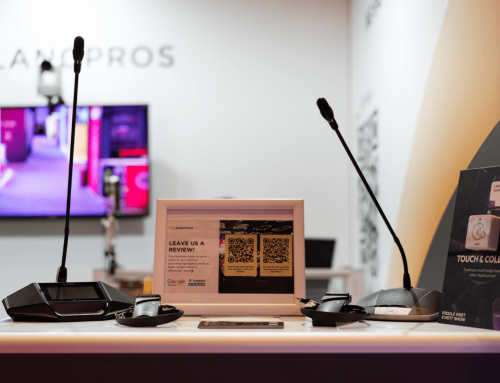
Advanced Conference Systems: High-security discussions use advanced audio transmission hardware, which guarantees absolute privacy and clarity.
-
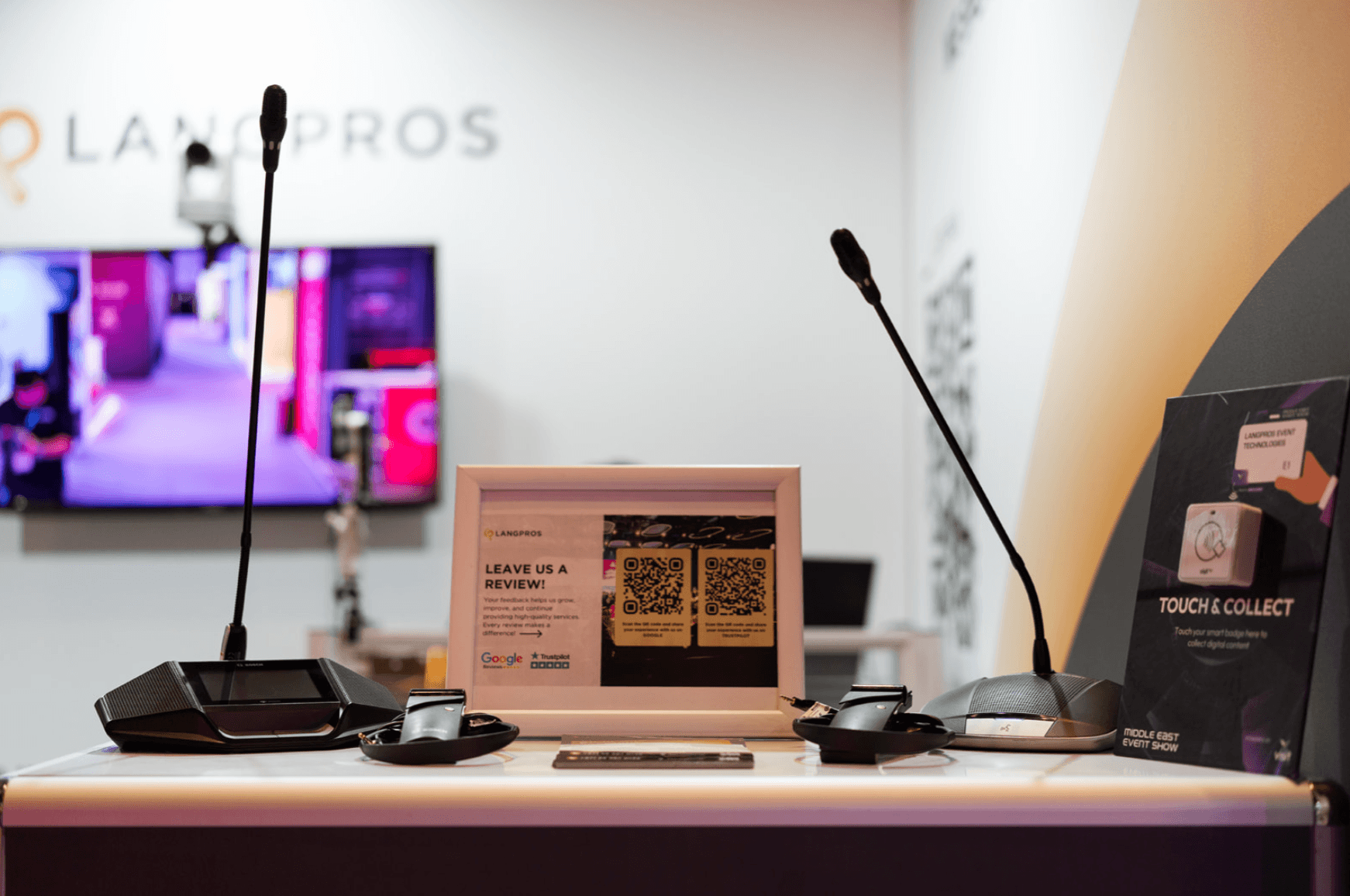
Integrated Hardware Ecosystems: Elite setups combine seamless Push-to-Talk (PTT) microphones, 4K PTZ automatic tracking cameras, and wireless receivers that blend directly with hybrid or remote simultaneous interpreting (RSI) platforms.
Managing language teams alongside technical AV equipment rentals used to be a fragmented multi-vendor nightmare. This is why smart event organizers are moving toward a unified approach. By bundling your expert, ISO-certified linguists with a single event technology partner, you eliminate vendor chaos, streamline communication, and can heavily optimize your overall execution costs.
Ready to Elevate Your Next Event?
Don’t let your critical message get lost in translation or ruined by multi-vendor technical chaos. Partner with Langpros, where global linguistic expertise, strict ISO 23155 compliance, and cutting-edge event AV technology come together under one roof.
You May Also Like