

Planning a corporate conference in the United Arab Emirates is an exhilarating experience. You get to stage world-class events in some of the most technologically advanced venues on the planet. But if you have been keeping an eye on local regulations, you know the event landscape is undergoing a massive shift.
The UAE’s upcoming Arabic Language Law (rolling out through 2026 and fully enforcing in 2027) establishes a binding legal requirement for events: conferences, corporate summits, seminars, and official meetings conducted primarily in non-Arabic languages must offer Arabic translation.
If you are an event organizer, venue manager, or corporate planner, this isn’t something to fear, it is an incredible opportunity to elevate your event. But how do you go from “Uh oh, compliance!” to seamless, stress-free execution?
Here is your easy, step-by-step guide to seamlessly integrating mandatory Arabic interpretation into your upcoming corporate conferences.
1. Understand the Law: Balance, Not Restriction
First, take a deep breath: the UAE is not banning English or international languages at business gatherings. The goal of the Ministry of Culture is balance, preserving the nation’s cultural heritage while maintaining the open, global atmosphere that makes the UAE a powerhouse for international business.
Under the legislative framework, if your primary presentation language is English (or French, Mandarin, German, etc.), your attendees must be given access to real-time Arabic translation. Additionally, public-facing promotional graphics, event advertising, and signage are expected to feature Arabic.
Rather than viewing this as a legal hurdle, smart organizers see it as an event upgrade. Making your content instantly accessible in Arabic deepens local engagement, respects local governance, and broadens your audience reach across the entire Middle East.
2. Match the Solution to the Stakes
One of the biggest mistakes an event manager can make is assuming “translation” is a one-size-fits-all checklist item. The way you deliver Arabic interpretation depends entirely on what is on the line.
Ask yourself: What does it cost my brand if a message is miscommunicated?
-
High-Stakes Gatherings (Government Summits, C-Suite Keynotes, Legal/Financial Forums): In these environments, precision is everything. A single mistranslated technical or legal term can derail an agreement or damage a reputation. For these, professional human simultaneous interpreters working in soundproof booths are an absolute necessity.
-
Routine or Internal Sessions (Overflow Rooms, General Webinars): For lower-stakes, informative content, AI-assisted machine interpretation or remote captioning can be a budget-friendly option.
Many modern conferences now use a Hybrid Interpretation Model. This blends elite, ISO-certified human linguists for primary keynotes with scalable AI translation streams for breakout sessions or digital audiences.
3. Plan the Tech Infrastructure Early (Don’t Leave AV to the Last Minute)
Flawless simultaneous interpretation is only as good as the technology driving it. You cannot simply hand an interpreter a microphone and hope for the best!
To deliver real-time Arabic interpretation without a hitch, your event AV setup needs to include:
-
Soundproof Interpreter Booths: Fully enclosed, ISO-compliant booths ensure linguists hear pristine audio without background venue noise.
-
Wireless Transmitters & Receivers: Infrared or digital RF systems send clean, clear audio straight to audience headsets.
-
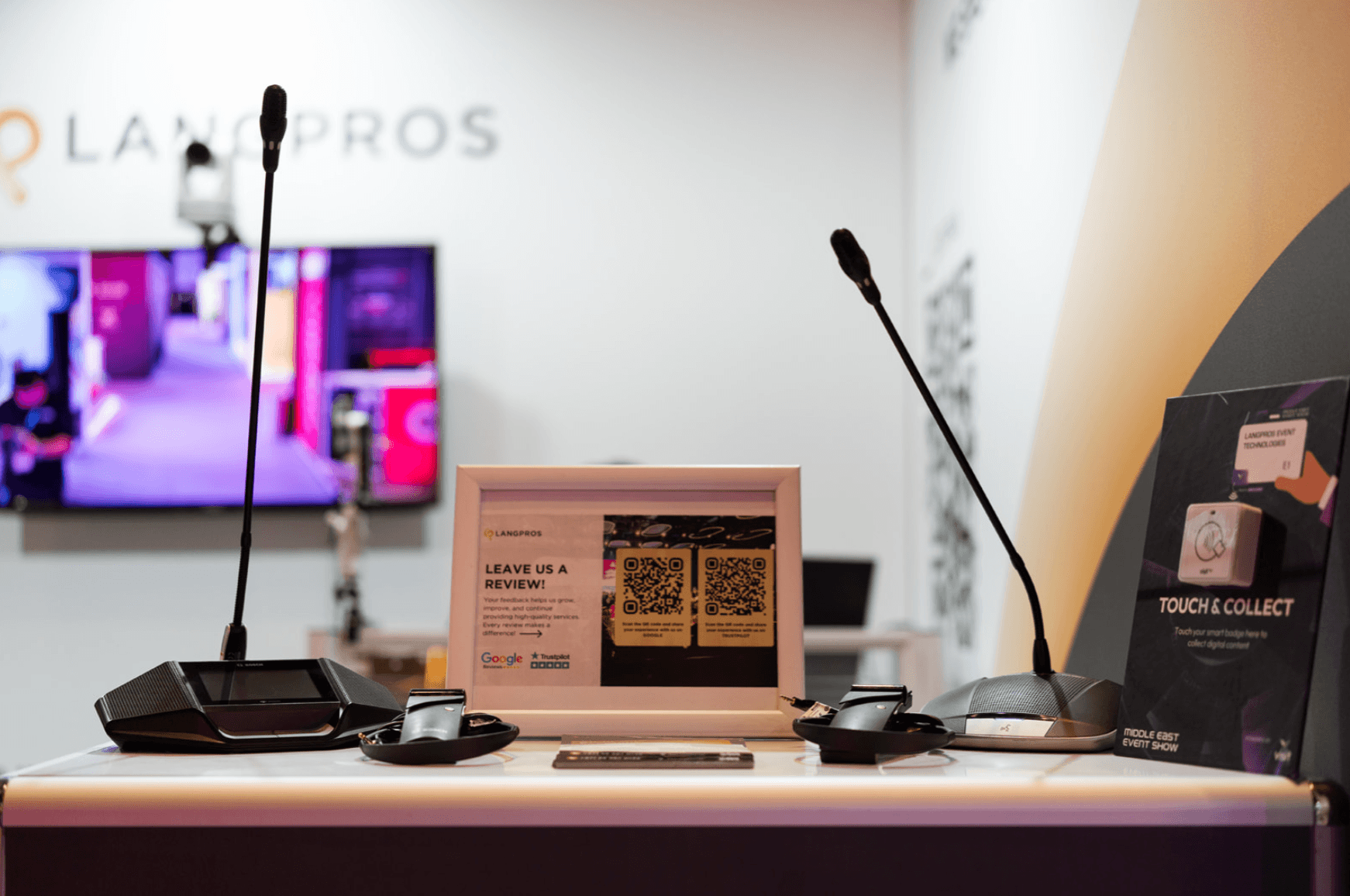
Push-to-Talk (PTT) Conference Mics: For interactive Q&A sessions or panel discussions, PTT mic setups ensure only active speakers are routed into the interpreters’ headphones, preventing audio overlap.
Pro Tip: Work with an integrated language and AV provider rather than juggling separate hardware rental companies and translation agencies. Having a single partner handle both the linguists and the hardware completely eliminates technical miscommunications and saves budget.
4. Prep Your Linguists Like Keynote Speakers
Even the best conference interpreter in the world needs context. Arabic is a rich language, and business Arabic (Modern Standard Arabic) uses specialized terminology depending on your industry. A financial panel uses vastly different vocabulary than a green energy summit or a healthcare expo.
To get 100% accuracy on event day:
-
Send Briefing Materials in Advance: Share speaker slide decks, agendas, speaker bios, and industry glossaries at least a week prior.
-
Clarify Company Names & Acronyms: Brand names and jargon don’t always translate literally. Make sure your interpreters know how you prefer key terms rendered.
-
Conduct an Audio Check: Schedule a full soundcheck with your AV technicians and booth interpreters before doors open.
5. Audit Your Events Calendar Today
Don’t wait until official enforcement penalties roll out to start scrambling. The smooth way to handle compliance is to build language access right into your initial event architecture.
Here is your quick action checklist:
-
Audit Upcoming Events: Flag all conferences, seminars, and corporate town halls where the primary language is not Arabic.
-
Review Promotional Assets: Ensure event landing pages, social media graphics, and printed agendas have Arabic versions ready.
-
Lock In Certified Partners: Look for language service providers backed by ISO 23155 (Conference Interpreting) and ISO 17100 (Translation Services) certifications to ensure compliance.
By making Arabic interpretation a core feature of your conference setup, you don’t just clear the regulatory bar, you create an inclusive, prestige event experience that resonates with regional stakeholders and international delegates alike.
Ready to elevate your next GCC conference?
Whether you need ISO-certified simultaneous interpreters, soundproof booths, or complete AV hardware setups, having an all-in-one partner makes compliance effortless. Contact Langpros today and get a free quote and a free AI demo!
You May Also Like