
Researched and written by Evan – ~5 min read
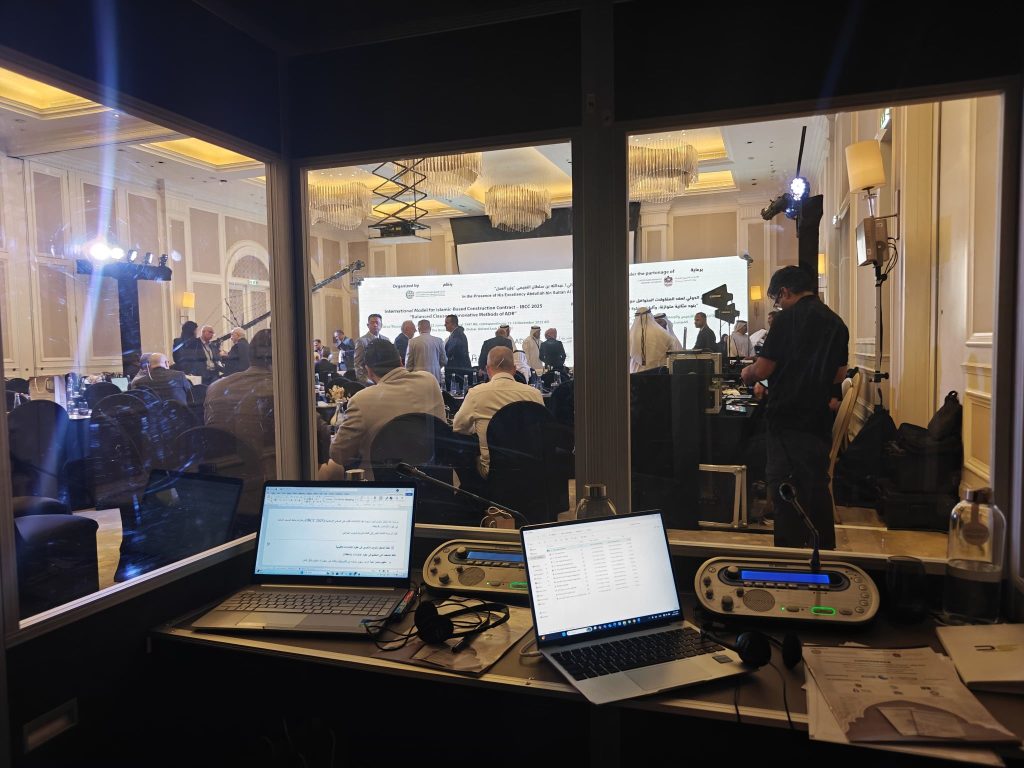
Whether it’s an international summit, a hybrid training session, or a global livestream, the demand for clear communication across languages continues to grow and 2026 promises to be a pivotal year for the translation and interpreting world.
From powerful AI tools to new collaboration models and rising industry expectations, the landscape is evolving fast. Here’s a friendly yet insightful look at the key trends shaping interpreting and translation in 2026.
1. Interpreting & Translation Markets Are Growing Strong
Language services are no longer niche, they’re essential.
In 2026, the interpreting market alone is projected to grow significantly, responding to an increasing number of virtual meetings, hybrid events, telehealth consultations, legal proceedings, and more.
At the same time, the global language services market overall continues expanding, with translation and localization retaining the largest share of service demand.
This means more opportunities for providers and more reasons for organizations to invest in multilingual communication.
2. Human + AI Collaboration Becomes Standard
AI is no longer a buzzword, it’s shaping how language professionals work.
Rather than replacing humans, AI tools are increasingly being integrated into workflows to support interpreters and translators. These hybrid approaches combine:
- AI’s speed and capacity to handle large volumes of content
- Human expertise for nuance, culture, and tone
This trend is transforming roles: language professionals aren’t just translating words anymore, they’re curating, supervising, and refining AI outputs for quality and meaning.
This hybrid model is not only more efficient but also helps organizations scale language access without sacrificing depth and precision.
3. Real-Time Multilingual Communication Is the New Norm
In 2026, audiences expect real-time understanding, not delayed subtitles or post-event summaries. Advances in technology and demand for instant engagement are pushing real-time interpreting and live translation to the forefront.
Interpreter platforms and virtual meeting tools (like Zoom and Teams) are integrating multilingual functionality, making it easier than ever for participants to select their language channel and follow conversations in real time.
This shift means that interpreting is no longer a “nice-to-have” add-on, it’s becoming a core feature of global communication experiences.
4. Remote and Hybrid Interpreting Continues to Boom
Remote interpreting is now a mainstay in the industry. The pandemic accelerated this shift, and the trend has continued as organizations embrace hybrid formats that blend in-person and online participation.
With better platforms, improved video quality, and demand for flexibility, remote language access makes interpreting more scalable and accessible than ever before.
For event organizers, this means reaching larger and more diverse audiences without geographic limitations and less cost for interpreters.
5. Specialized Language Services Are on the Rise
General interpreting and translation remain in high demand, but so does specialization.
Industries such as legal, medical, financial, technology, and government require interpreters and translators with domain expertise. Clients want professionals who:
- Understand technical jargon
- Navigate regulatory compliance
- Handle confidential and sensitive content
This trend reflects broader industry needs: language services must be accurate, context-aware, and fit for purpose, not just linguistically correct.
6. Voice & Video Localization Takes Center Stage
Text isn’t the only medium anymore. Video and audio content dominate global communication, from webinars and product demos to training programs and social media.
This trend means language providers are expanding beyond text and interpretation to include:
- AI-powered subtitling
- Dubbing services with natural voice synthesis
- Multilingual voiceovers
As audiences seek richer engagement, localizing video content becomes essential and providers must adapt to support this shift.
7. AI Tools Continue to Mature
AI tools, especially neural machine translation and generative AI, are becoming more capable each year.
Large Language Models (LLMs) can now draft multilingual copy, adapt tone and style, and even support post-editing workflows. These technologies are already influencing how language teams scale translation work while upholding quality.
MTPE (Machine Translation Post-Editing), where human experts refine AI output, is also becoming widespread, especially for high-volume, low-risk content.
This doesn’t make human translators obsolete, it reshapes their role towards quality assurance and strategic oversight.
8. Personalized and Contextualized Localization Is in Demand
Global brands are moving beyond simply translating words, they are hyper-localizing content. This means tailoring messages to:
- Regional dialects and cultural context
- Local regulations and market expectations
- Audience preferences
Rather than a one-size-fits-all translation, hyper-localization treats cultural nuance as part of the product or campaign itself.
This approach increases engagement and drives stronger connections with local audiences.
9. Security, Compliance & Ethics Gain Importance
As language services handle more sensitive content, data security and ethical standards become crucial.
Regulatory frameworks and privacy laws are prompting service providers to adopt strict compliance measures, encrypted workflows, and industry certifications.
Responsible AI usage is also on the rise, with more focus on fairness, transparency, and human oversight.
This trend underscores a simple truth: language services are not just about communication, they’re about trust.
10. Interpreters Are Becoming Strategic Partners
With routine tasks increasingly automated, interpreters and translators are moving into strategic roles within organizations.
Rather than just delivering words, professionals are:
- Ensuring cultural and contextual integrity
- Acting as consultants on global communication strategy
- Managing hybrid human + AI workflows
- Advising on localization best practices
This elevates language professionals from service providers to communicative partners in international initiatives.
Final Thoughts: What This Means for 2026
The language services industry in 2026 is dynamic, tech-driven, and deeply human. While AI and automation enable scale and speed, cultural nuance, context, and trust remain firmly in the hands of skilled professionals.
Here’s what to expect in practice:
- Faster, smarter workflows powered by AI + human collaboration
- Real-time, global communication as a standard expectation
- More specialized language services tailored to sector needs
- Hyper-local experiences that resonate with real audiences
- Strategic language partners that support businesses in every market
2026 is not just about translating more; it’s about communicating better.


 Langpros